
Health · 4 views
Experimental drug shows promise in overcoming treatment resistance in aggressive acute myeloid leukemia
Researchers at the Johns Hopkins Sidney Kimmel Comprehensive Cancer Center and Johns Hopkins Children's Center found that an experimental drug may help overcome one of the major challenges in treating an aggressive subtype of acute…

Summary
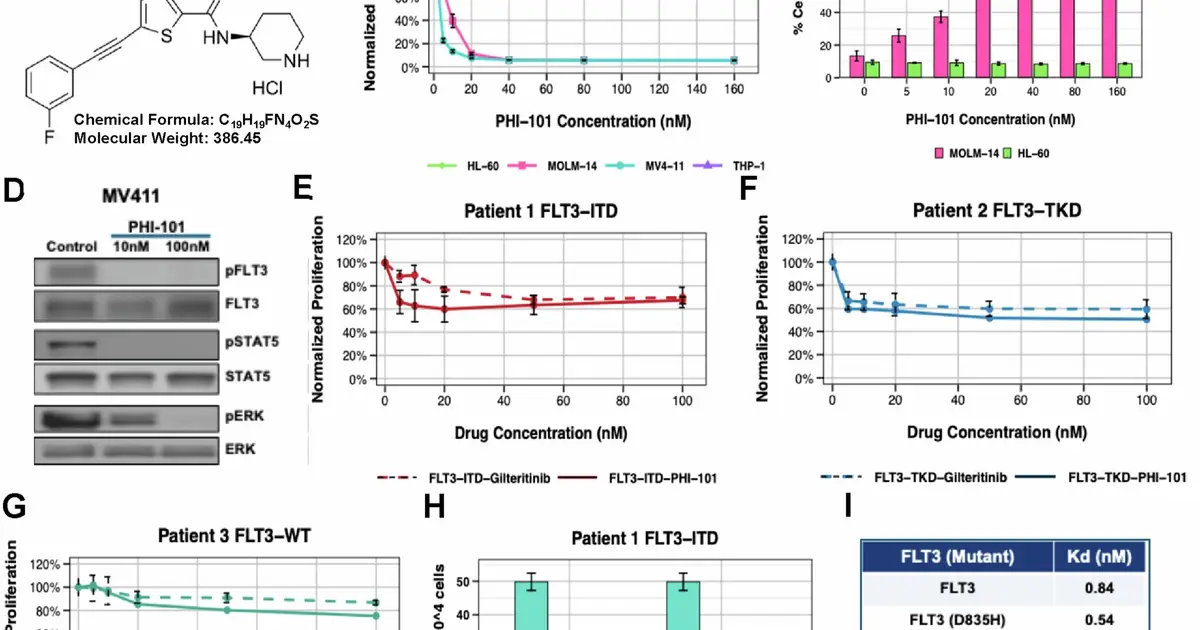
Researchers at the Johns Hopkins Sidney Kimmel Comprehensive Cancer Center and Johns Hopkins Children's Center found that an experimental drug may help overcome one of the major challenges in treating an aggressive subtype of acute myeloid leukemia (AML), known as FLT3-positive AML. In laboratory and animal studies, the drug, called PHI-101, was effective against leukemia cells carrying genetic mutations that cause resistance to existing FLT3-targeted therapies. The findings, published Oct.
AI summaries can be wrong sometimes—always verify important details using the source article.
How AI & Automation are usedMore from Health
Continue reading recent Health coverage
- A protein that teaches cells to tolerate DNA damage points to a new vulnerability in cancerContinue reading
- A forgotten organ sheds new light on the origins of the ovaryContinue reading
- New evidence suggests heart cells transmit electrical signals through more than direct connectionsContinue reading
- Contraceptive pill usage in Great Britain fell drastically in last decade, research findsContinue reading
Support HappeningNow
Independent AI-powered news analysis is reader-supported. Your contribution helps cover infrastructure, summaries, and continued platform development.
Support HappeningNow