
Science · 4 views
Catalyst regeneration enables durable hydrogen production from ammonia
Researchers at the National University of Singapore (NUS) have developed a catalyst-regeneration strategy that could make hydrogen production from ammonia more efficient and reliable.

AI Summary
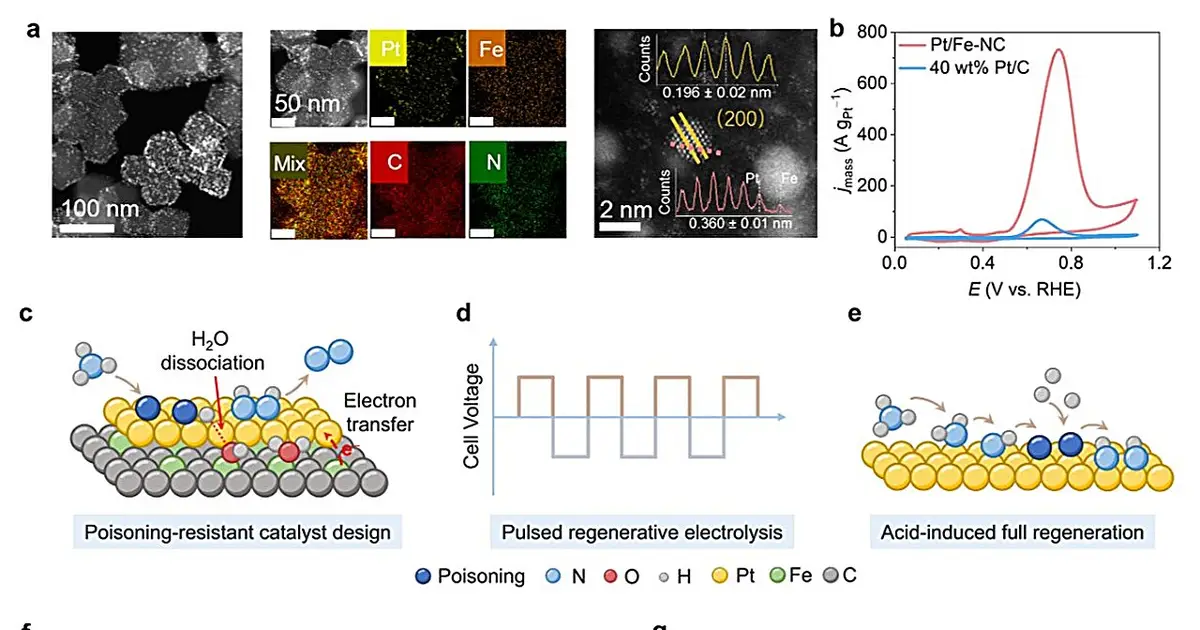
Researchers at the National University of Singapore developed a catalyst‑regeneration strategy that keeps platinum‑based catalysts effective during electrochemical ammonia cracking. The approach prevents surface oxidation and nitrogen blockage that normally reduce catalyst activity. In laboratory tests, the regenerated catalysts sustained hydrogen production for more than 2,000 hours. The study shows that ammonia, which can store and transport hydrogen without emitting carbon dioxide, can be converted to hydrogen and nitrogen using electricity in a more reliable, energy‑efficient process.
AI summaries can be wrong sometimes—always verify important details using the source article.
How AI & Automation are usedMore from Science
Continue reading recent Science coverage
- Chip-based laser cooling could ease quantum computing bottleneckContinue reading
- Reusable molecular fabric could cut energy needed to separate industrial chemicalsContinue reading
- The Number of Teeth in Your Mouth Could Be a Major Warning Sign of DementiaContinue reading
- Toxic Salton Sea dust may trigger lung inflammation and reduce gut microbial diversityContinue reading
Support HappeningNow
Independent AI-powered news analysis is reader-supported. Your contribution helps cover infrastructure, summaries, and continued platform development.
Support HappeningNow