HAPPENING NOW
Science
Ancient genome duplications laid the foundations of complex brains, research suggests
New findings, published in Nature, help answer the riddle of how vertebrates evolved the diverse array of brain cells that distinguishes them from other animals.

AI Summary
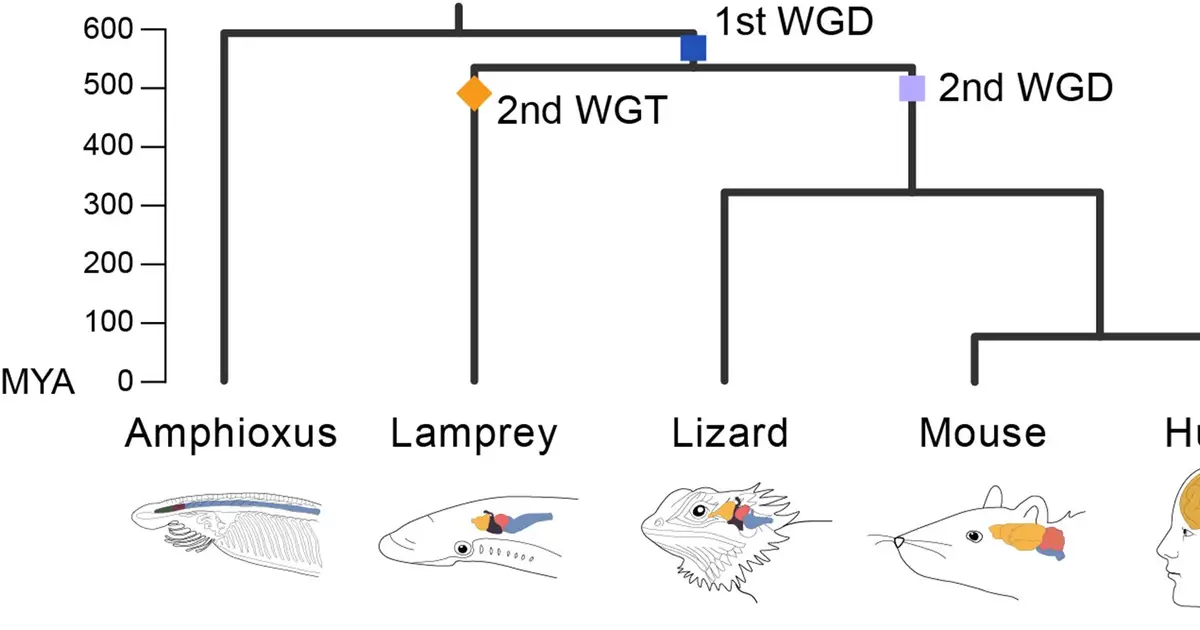
New findings, published in Nature, help answer the riddle of how vertebrates evolved the diverse array of brain cells that distinguishes them from other animals. It appears that a dramatic expansion of the genetic toolkit more than 450 million years ago enabled the emergence of different kinds of brain cells. These cellular innovations are shared across vertebrates—from primitive fish to mammals—and form the basis of the sophisticated brains seen today.
Read full article on PHYSAI summaries can be wrong sometimes—always verify important details using the source article.
Enjoyed this article? Consider supporting HappeningNow to help keep independent AI-powered news analysis moving forward. Your contribution helps cover infrastructure, AI summaries, and continued platform development.
Support HappeningNow