
Health · 3 views
AI uncovers rapid changes in Parkinson's brain signals by separating rhythms from background activity
A research team led by professor Ji-Woong Choi of the Department of Electrical Engineering and Computer Science at DGIST has developed NONOS, a deep learning–based analysis technology that precisely separates rhythms from the underlying…

AI Summary
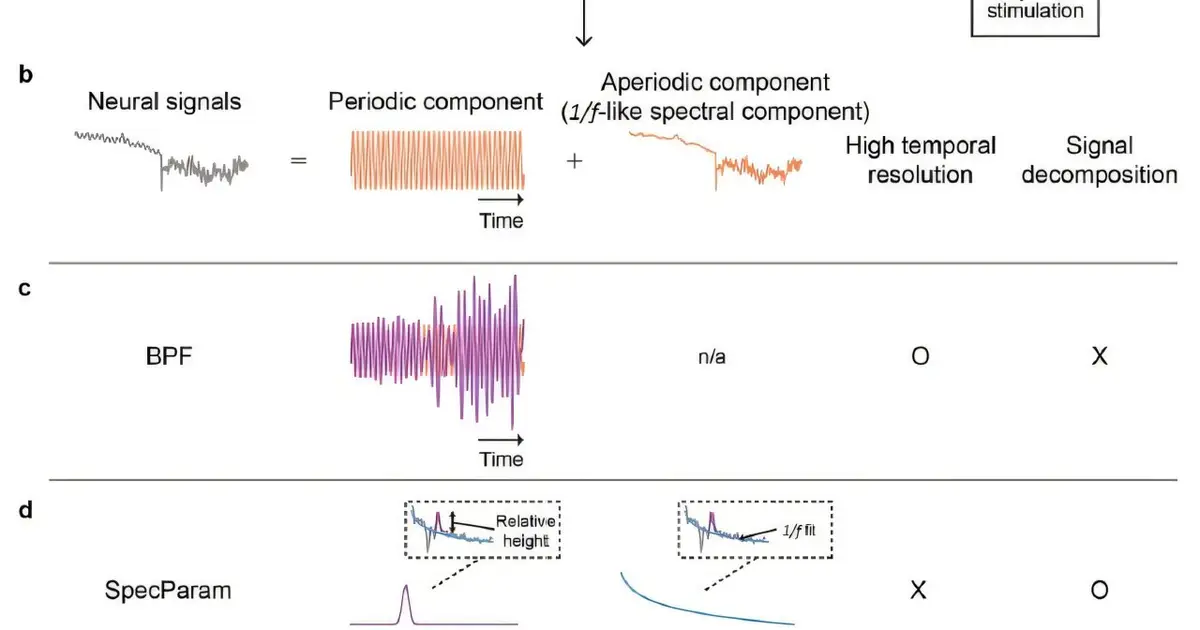
A team led by Professor Ji‑Woong Choi at DGIST created NONOS, a deep‑learning tool that separates rhythmic brain activity from background signals with high temporal resolution. The method was developed in collaboration with researchers from Kumoh National Institute of Technology, Korea University, and the Korea Brain Research Institute. NONOS isolates oscillatory components—regularly repeating electrical rhythms—from non‑oscillatory background noise in brain recordings. The results, published in NeuroImage, demonstrate the technique’s ability to extract clear rhythmic signals, analogous to picking out a single voice in a noisy environment.
AI summaries can be wrong sometimes—always verify important details using the source article.
How AI & Automation are usedMore from Health
Continue reading recent Health coverage
- Does time on social media make teens anxious and depressed? The evidence is not so clearContinue reading
- Biden's Cancer Update; Big Election Night for Doctors; Blood Bank CyberattackContinue reading
- A third of babies have peanut allergy diagnosis removedContinue reading
- Age may influence links between psychedelic use and mental healthContinue reading
Support HappeningNow
Independent AI-powered news analysis is reader-supported. Your contribution helps cover infrastructure, summaries, and continued platform development.
Support HappeningNow