
Science · 19 views
Active and passive membrane exchange reshape how cell surface clusters grow, study finds
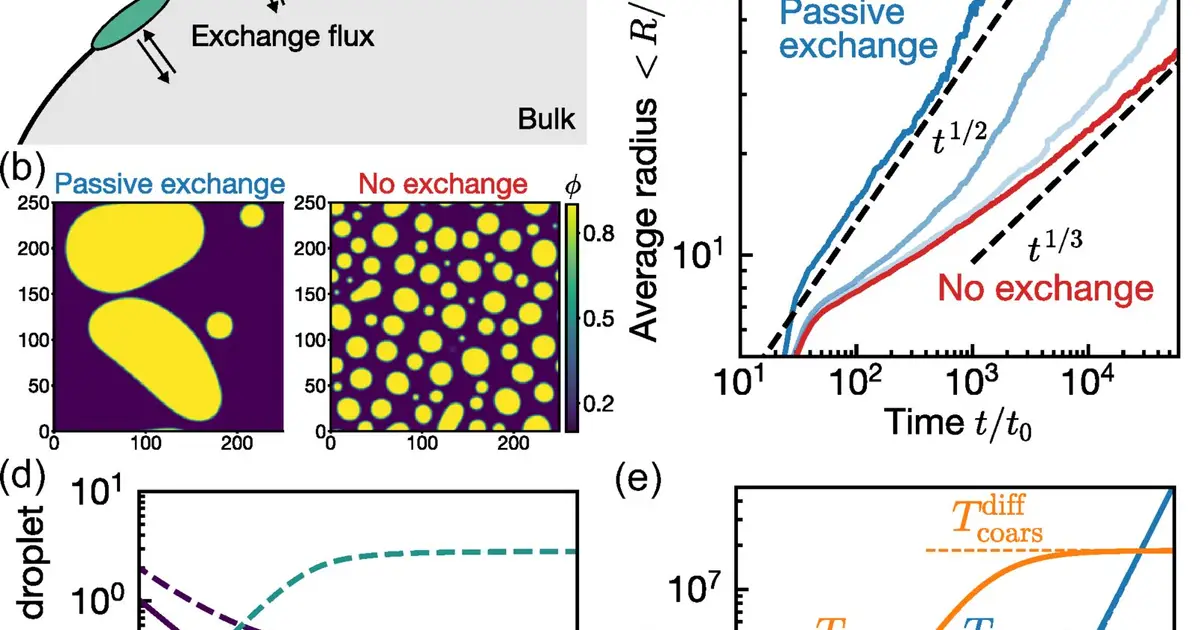
Cellular membranes not only constitute a barrier, but they also accommodate a plethora of different molecules for sensing and ensuring cellular function. These molecules often cluster together, forming condensates embedded in the membrane.

Summary
Cellular membranes not only constitute a barrier, but they also accommodate a plethora of different molecules for sensing and ensuring cellular function. These molecules often cluster together, forming condensates embedded in the membrane. A team of physicists from MPI-DS investigated how the exchange of material with the interior of the cell affects the size and number of such clusters.
AI summaries can be wrong sometimes—always verify important details using the source article.
How AI & Automation are usedMore from Science
Continue reading recent Science coverage
- Fossil plankton shells reveal reduced nitrogen fixation in warmer oceans 3 million years agoContinue reading
- Report on global water resources: Worldwide continents are drying upContinue reading
- New krypton-88 data narrow a key gap in stellar strontium modelsContinue reading
- Climate change contributing to permafrost thawing and glacial thinningContinue reading
Support HappeningNow
Independent AI-powered news analysis is reader-supported. Your contribution helps cover infrastructure, summaries, and continued platform development.
Support HappeningNow