
Science · 29 views
A turquoise tint for the Black Sea caused by phytoplankton
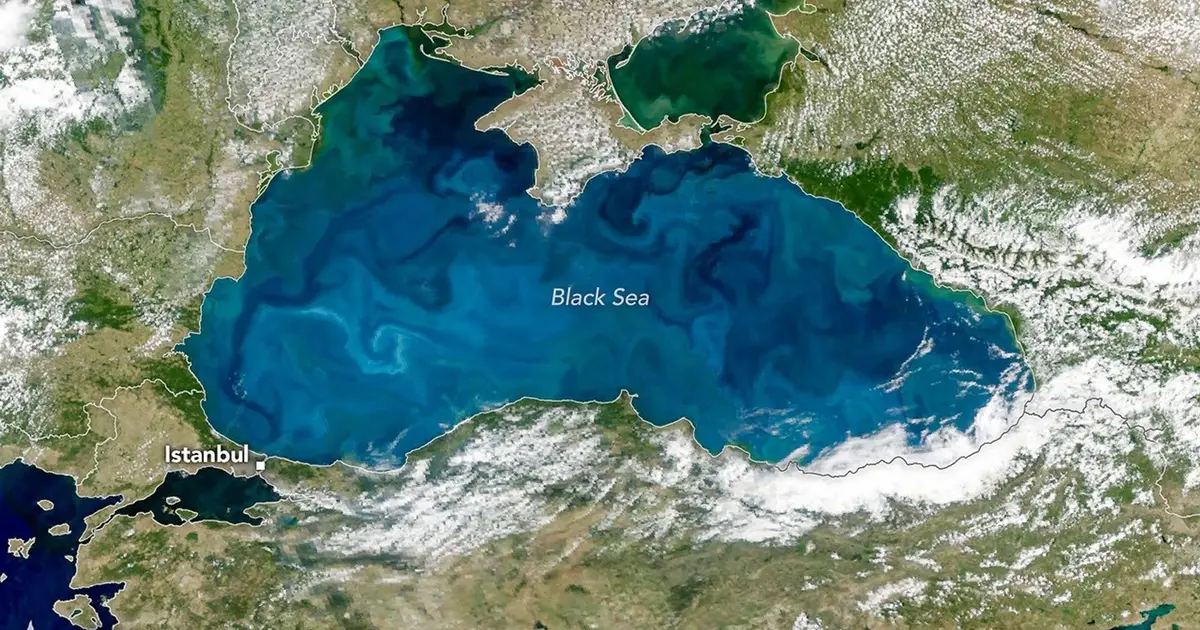
The Black Sea sits at the boundary between Europe and Asia and connects to the Mediterranean Sea via a chain of waterways.

Summary
The Black Sea sits at the boundary between Europe and Asia and connects to the Mediterranean Sea via a chain of waterways. Its surface often appears dark, but each spring and summer it transforms into a striking expanse of swirling turquoise. The OCI (Ocean Color Instrument) on NASA's PACE (Plankton, Aerosol, Cloud, ocean Ecosystem) satellite captured this image (above) on June 22, 2026.
AI summaries can be wrong sometimes—always verify important details using the source article.
How AI & Automation are usedMore from Science
Continue reading recent Science coverage
- In animated films, nonhuman characters are still overwhelmingly maleContinue reading
- Millions of Americans Use Cannabis to Help Them Sleep. It Could Be Doing The Opposite.Continue reading
- White Sands footprints suggest humans experienced abrupt environmental shifts during the last ice ageContinue reading
- Lunar fault maps reveal how much the moon is shrinkingContinue reading
Support HappeningNow
Independent AI-powered news analysis is reader-supported. Your contribution helps cover infrastructure, summaries, and continued platform development.
Support HappeningNow