
Science · 2 views
A closer look at hard-to-see cells could answer new questions about nerve damage and recovery
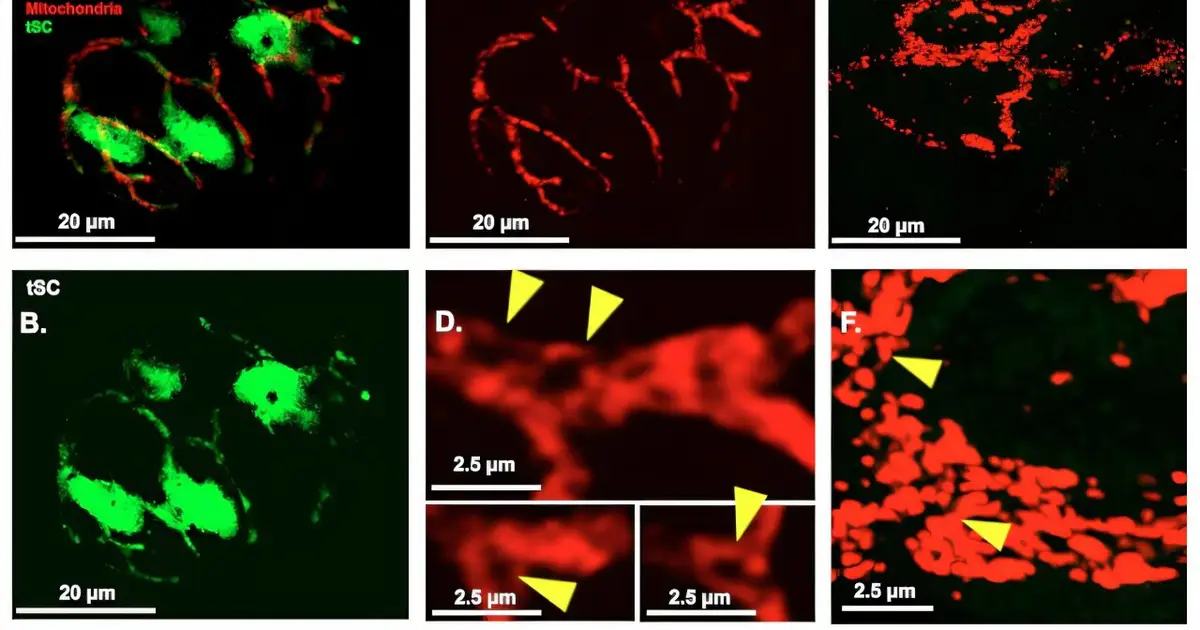
Under the microscope, mitochondria inside healthy terminal Schwann cells form a web of interconnected branches, with tiny doughnut-shaped loops appearing near where the cells branch and split.

Summary
Under the microscope, mitochondria inside healthy terminal Schwann cells form a web of interconnected branches, with tiny doughnut-shaped loops appearing near where the cells branch and split. But getting that view presents a challenge. Terminal Schwann cells—which help maintain and repair the connections between nerves and muscles—can begin changing shape the moment they are removed from their natural environment. That makes it difficult for scientists to study intracellular components as they would be in the body.
AI summaries can be wrong sometimes—always verify important details using the source article.
How AI & Automation are usedMore from Science
Continue reading recent Science coverage
- Brain training shows promise for short-term depression reliefContinue reading
- Mushroom-derived peptides boost saltiness by up to 70%, offering a path to low-sodium foodsContinue reading
- Newly discovered 3D 'chair' shape can fill all space without repeating patternsContinue reading
- They war-gamed dimming the Sun. It went even worse than you think.Continue reading
Support HappeningNow
Independent AI-powered news analysis is reader-supported. Your contribution helps cover infrastructure, summaries, and continued platform development.
Support HappeningNow