
Science · 85 views
North Sea heat wave fueled underwater plankton bloom largely missed by satellites
When a marine heat wave strikes, scientists often turn to satellites to see how the ocean is responding.

AI Summary
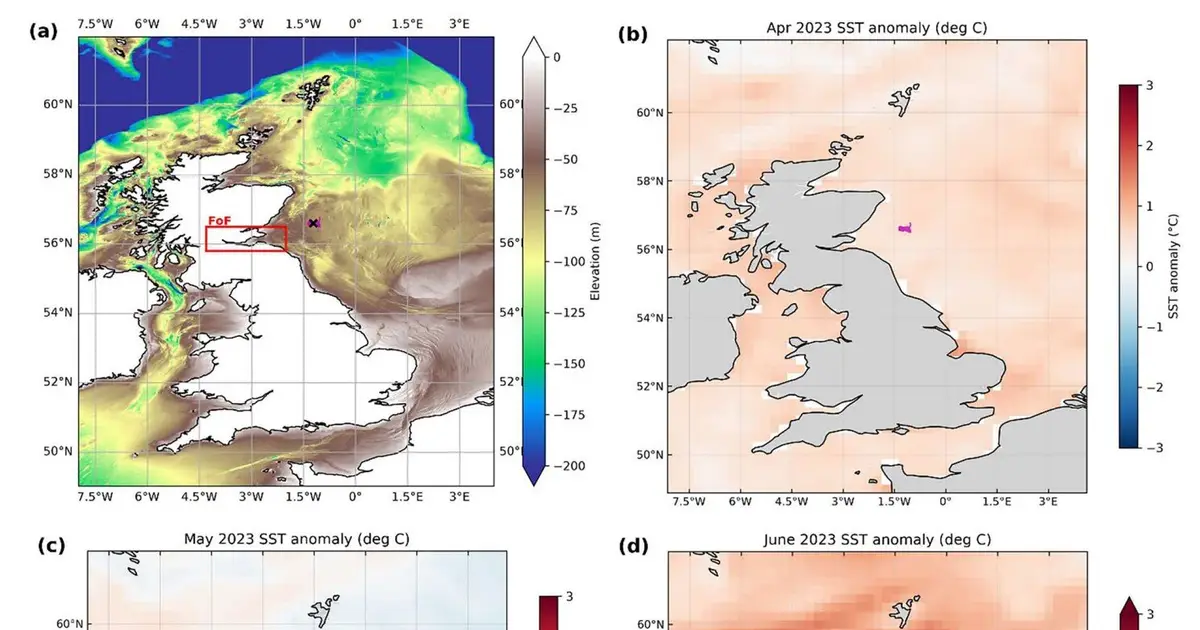
In June 2023 a severe marine heat wave hit the North Sea. Scientists normally use satellite imagery to track changes in ocean color, which indicates phytoplankton activity. Satellites, however, can only detect surface signals. During this heat wave researchers found a significant biological response occurring beneath the surface that satellites missed. The study highlights the limits of satellite monitoring for deep‑water ecological changes.
AI summaries can be wrong sometimes—always verify important details using the source article.
How AI & Automation are usedMore from Science
Continue reading recent Science coverage
- There's Another Cat Parasite That Can Infect Humans. A Huge Study Reveals How Common It Is.Continue reading
- After 40 Years, Chornobyl's Radioactive Particles Are Surprisingly StableContinue reading
- Scientists uncover mystery of how snail shells coil to the right or to the leftContinue reading
- Astronomer leads global team on NASA mission to create unprecedented view of the early universeContinue reading
Support HappeningNow
Independent AI-powered news analysis is reader-supported. Your contribution helps cover infrastructure, summaries, and continued platform development.
Support HappeningNow